Tag Archives: missionary nursing

Saturday May 21

What a day! I found a riding partner, a friend named Nelson, and we took a long dusty trip down the worst road in the history of roads. Two and a half hours later we arrived at the home where my dear friend and practically adopted daughter, Janet, has been staying. There I got to meet her uncle, aunt, and some extended family. I was welcomed, fed, and treated like a royal guest. Uncle Charles was surely sizing me up for intentions but was gracious and a generous host. We spent far too long there for the rest of the stops we would make. 

Nelson, Janet, and I left there and went down the main road only a little while and found the home of Sharon, our friend with the surgical concern. Even though we had just finished lunch she forced us to sit at her table for another lunch. I was informed that it is extremely rude not to eat what is offered. She had slayed a chicken for us so it seemed proper to eat it. I showed her the GoFundMe page we started on her behalf, and she was thrilled to see all the donors who had contributed to her care. Her eyes beamed with gratitude even as she blessed our little group. She is quite a prayer warrior!

After lunch we wrestled our way back down that horrible Lira Road, this time with rain that disguised the depth of all the potholes and reduced visibility. I hate that road! 

We were nearing Gulu when we passed a group of pedestrians we recognized. It was the boys football team from the mission I have visited before. Their car stranded, they were walking toward Karuma, roughly 40 km (25 mi) away. I loaded the van with footballers and we turned around headed for Karuma. 

As we neared the Nile River, we found the rest of the team, somehow much nearer Karuma. They waved frantically at us to stop, and motioned that there was danger. Just ahead was a herd of elephants on the side of the road. We stopped to see what they would do. They are known to topple cars that get in their way so we kept our distance. A tour bus ahead of us stopped just after passing the giants, and that seemed to startle them away from the road. As the elephants scattered back into the bush, the walking half of the football team ran passed that spot as if they were being chased. Elephants are the symbol of the Acholi people, but they are reverently feared.

 We caught up with the group at the police checkpoint just shy of the Karuma Bridge and stopped to ask if we could help. After the police involved themselves in the exchange I ended up with one or two fewer passengers than the twelve I had been carrying. We all crossed the Nile, some in the van, some privileged to see the amazing rapids close-up and on foot. 

By the time we got away from our unscheduled detour, it was well past dark. One common piece of advice in Uganda is not to drive in the dark unless you absolutely have to. I braved the ever-changing obstacle course of humans, livestock, and automotive traffic with and without headlights or high beam dimmer switches all the way through Gulu to the north side of town where Janet would stay with her old teacher, my new tutor, Beatrice. 

As much as we wanted to stay, Nelson and I once again pierced the darkness and emerged into the warm welcoming light of home. After a brief rodent hunt and unfruitful hearing aid search we went to bed.

The rest of May

The thing about journaling is one does it when there is nothing else to do. I have been insanely busy, and have often fallen asleep on the couch reviewing my studies. The other factor is that I have been involved in the lives of several who, for security’s sake, must remain nameless on this media.

The troubles that have plagued me this far include a lack of water with bad shoulders that harshly object to carrying 20 Liter (5-gallon) Jerry cans full of water to the bath. Apparently when my landlady switched my meter she assigned me one with an outstanding balance and cut off my lock giving free access to all my neighbors while I was in Florida. The result was a shutoff account my first week here.

Another little nuisance has been Jerry the rat. Jerry stole one of my hearing aids and apparently ate it. I found the battery for it inside his nest inside the kitchen range I destroyed in the process of hunting him, but the hearing aid was not there. Now I need to hire a junk removal man to take away the scraps of the stove I once was so happy to receive. While I waited for the arrival of the rat trap I ordered, I tried to make friends with Tom, the neighbor’s cat, hoping he could help me take care of little Jerry permanently.

My association with several former wards and staff of the mission I once served has caused me to be unwelcome at that mission. I have not been able to visit friends there, whether staff or children. In fact, Patrick, who goes to school next door to my house and visits often, was told he is unwelcome to return even to visit his wife and boys there.  His wife has been threatened with termination if he returns. I do not understand the politics of man, and I would never have expected a Christian organization to behave in this way.

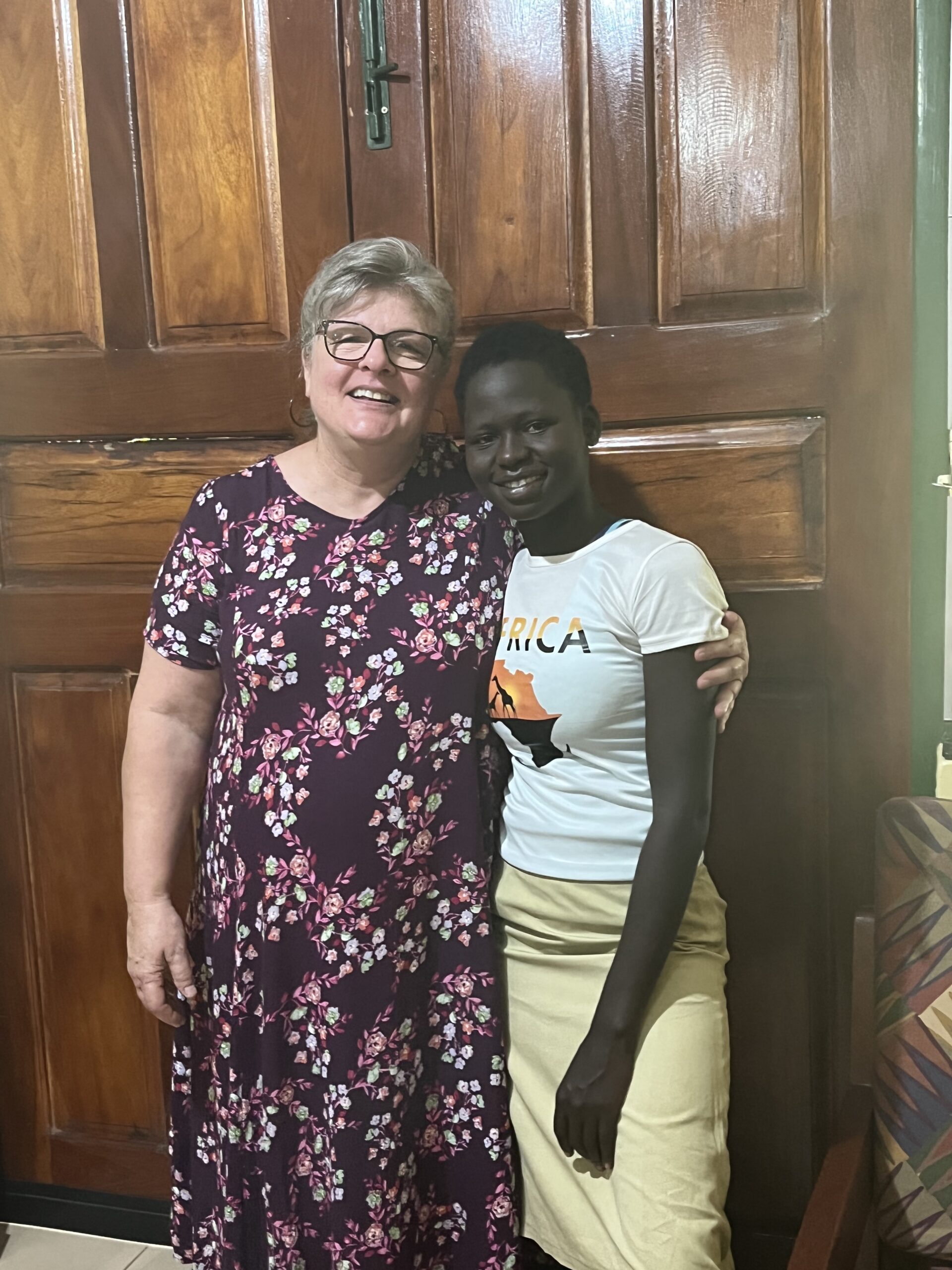
Beatrice has been such a great teacher! When I am in the market, people are amazed I have begun to speak their language. Her husband, Simon, who is a professional driver, has occasionally relieved me of my driving duties, especially on the long backroads that are so hard on my shoulders. 

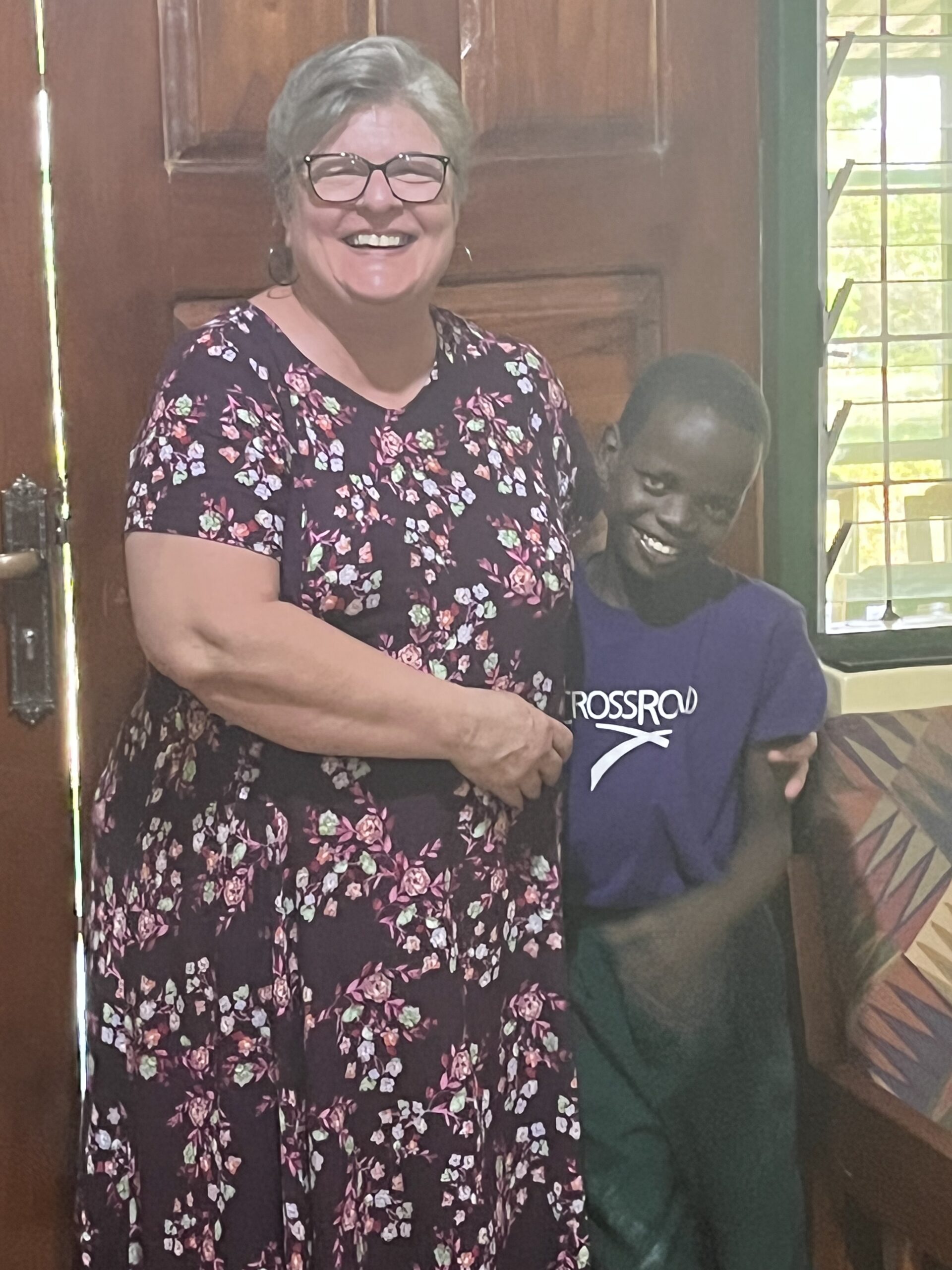
Janet’s cousin Dorcas has joined us to help out with housekeeping at Beatrice’s home and mine. Dorcas speaks Acholi Luo and very little English, so we are helping each other learn. Her brother-in-law died, so we travelled to her husband’s remote village in Oyam District. This was my second Ugandan funeral, but it was still a cultural experience. This one had no interpreter, but I was happy to have less attention. Every eye was on me when it was time to eat, and each one turned to smiles when the munu (white one) had no trouble eating the local fare with his hands.

The first Sunday I was here, we attended the Catholic service at the School of Nursing next to my house to be supportive of Patrick and a few other Catholic Christians in our group. The second week we went to Beatrice’s church, a small, primitive group with a lot of energy but not much else in the way of resources. There, one of the ministers singled me out and began to preach at me, using scripture to condemn my use of jewelry, my diet of pork, and my comparative wealth. The third Sunday, I talked the group into visiting Gulu United Methodist Church, but when we got there it was empty, so we went to the Watoto Church in town. It felt like the charismatic congregations in America, with English worship, electronic displays, and a rowdy choir. It turns out we were at the charismatic church on the Day of Pentecost, so that was a real treat, especially for the conservative traditionalists in my group.

Last week I toured a couple properties in Minakulu, where I hope to plant TLC Uganda Ministries. There was a piece of land about 5.4 acres, less than a kilometer from the main highway, but the price was ridiculously high. Just around the corner from that land was an abandoned health center, complete with pharmacy, out-patient department, in-patient ward, maternity ward with birthing room, and office building. It was in terrible disrepair, but the rent for it was reasonable. After I left, the caretaker called to say she would inquire with her tribal elders about selling the property outright rather than renting. Any such consideration will require an engineer’s approval. 

No one really gets in a hurry here. Even if you are in a rush, the pace is “when we can.” I have learned to sit back and say, “TIA!” which stands for This is Africa! Leisure is part of the way of life here and no one does business without first exchanging a greeting and pleasantries. Americans have got so rushed it is a refreshing change…until you need something in a hurry.

Monday June 6

I went to the water management office at the opening of business. I was told to wait for a staff meeting which may take a while. It did! 

I capitalized the time doing some shopping in town. I got my old Uganda phone line fully reinstated, bought a tire for the van, had a bad battery terminal replaced on the van, had the tire mounted, and then made it back to the water management office, where I still had to wait. I am so glad I didn’t just take a number!

When humans did begin to emerge from the staff meeting, I was greeted by the Revenue & Technical Manager, Okidi Robert. He did not just send one of his plumbers, but came with me himself to inspect and correct my water problem. We had the same problem with this line as with the original one I fixed — a bad shutoff valve. We rode into town to get the part and were almost home when the car overheated so severely that it stalled out. We were stranded, but only a few hundred meters from home, so we walked it together.

Once the water executive finished my plumbing, he educated me about direct lines, like the one to my kitchen sink, and all the rest which are tank-fed lines. Since the tank would take a few minutes to fill sufficiently to meet demand, the only one to work now would be the kitchen and the spigot at the meter. This became far more important later when the tank never filled. I was still forced to tote water in Jerry cans for showers and toilet flushing.

I managed to cool off my engine and make it once more to Beatrice’s house, but on the way back the van overheated again. I was watching the gauge go toward the dangerously hot end of the measuring line but could not stop in town because of a violent mob that had gathered to beat down a man I assume was a shoplifter. It was ugly! I’ve seen some abusive force before but nothing like what this mob was doing to that poor man. Justice would have to wait for another day. This white boy followed discretion’s voice, rolled up the windows, locked the doors, and kept pushing the steaming car forward to the next sub-division. 

In Layibi, sort of a town at the south end of Gulu, I stopped to burn my hand on the radiator cap and add some more water to the steaming cooling system. A local man was happy to help me get water in the 5-liter Jerry can I carry for just this purpose. I am recognized in this marketplace because I often stop here for eggs, bread, and corn flour.

I managed to limp home but just barely. A call to the mechanic I trust confirmed the head gasket likely needed to be replaced. I recalled that the missionary that sold me the van warned that the head gasket was wearing thin. Now it was critical. I paid for the tow and agreed to do without transportation for a week or two. What was my option? Drive with no engine?

Tuesday June 7

It was a good thing I gave Beatrice a teacher’s planning day, because I had a lot to do at home. First, the tow truck arrived and took away my transportation. After breakfast I busied myself tearing apart the rest of the kitchen range, looking for my hearing aid. I finally found it in the bottom of the mess I made tearing this poor stove apart. There was not enough of the hearing aid left to salvage, but maybe the factory in Texas will get a kick out of the story and replace it with a refurbished one. Since the new ones are $2,500, it would have been worth the destruction of a $300 stove if it had been intact.

The other order of business for the day was to contract the landlady’s plumber to come figure out why my water tank is not filling. He said he would not be here until 4pm, but in Uganda time that is usually 10am the next day. If he shows up and fixes it there will be one long, cold shower in my future!

I have been thinking about how I will get around while the van is in the shop. It is not safe to hire just any Bodaman in town. There are some competent professionals, but some are idiots, and still others are crooks who will drive you to an ambush site. There an accomplice knocks a passenger over the head and takes all their belongings. Then the driver reports a Boda accident and the police believe the head injury is a result of the crash. Police in Kampala once told me that is the number one crime in Uganda, and it often results in death. The alternative is waving down a passing car. This method, known here as “public transportation” costs a little more but amounts to ride-sharing and, except for the risks, is acceptable. I have made my way around this way before I had a car.

I spent the leisure time of the day studying my Acholi Luo notes and writing them in a computer document. Maybe someone else will find the information useful someday.

Things I used to view as dangerous are just part of life now. When Cindy and I first came to Uganda, everyone told us to be in before dark no matter what. I am not sure what boogey-men come out after dark, but I have only made it home in daylight twice since I have been here. Driving at night has its own  danger but I have found the risk outweighs being paralyzed at home. Just living in Uganda is dangerous, but then so is living anywhere. My plan is to go where God sends me and trust Him to be there when I catch up.
You folks probably know how much I like writing about what God is doing, but I have recently committed to publishing an official newsletter, and Volume 2 is ready for your viewing. You can always navigate to the Newsletters page but I like making it easy so here it is:

As the late Robert A. Cook used to say: "Walk with the King today and be a blessing!"

Oh! While you're at our website, will you please fill out the Getting to Know You form to help us keep our records up to date? We would love to hear from you anyway.

Our January 15th flight out of Jacksonville, Florida was cancelled due to icy winds in Washington DC. We were sent home and asked to try again later, but were told no flights would connect to our destination for a week. Since Cindy only had two weeks to spend going with me to Uganda, she dusted off her administrative skills and schooled the airline on how to connect the dots with connecting flights she discovered on her own. We left the next day, this time through the “Windy City” of Chicago, where there is never any icy wind. We learned to favor that airport over many, since one can deplane from a domestic flight and board an international one without repeating the TSA checkpoint rigmarole. We connected in Brussels, Belgium, where we again avoided a lengthy security check, and were quickly underway for Africa. One brief stop in Bujumbura, Burundi, and we were off again for Uganda. 

When we landed in Entebbe, we got through Immigration without a hitch, then went to the mobile phone kiosk to reactivate my phone line and get Cindy one of her own. As we left the airport and it’s complimentary Wi-Fi, though, our new phone lines still inactive, we were left without communication. Without the option of calling on friends, we decided to risk engaging one of the throng of taxi drivers hawking their service at the airport exit. Kenneth, the driver we engaged, was more than pleased when we told him we were willing to hire him to take us all the way to the capitol city of Kampala, where our familiar driver, Jeremiah, lives.

When we arrived at Tick Hotel, it was 2:30 am, and the night desk clerk was sleeping on a lobby couch. His befuddlement will come into play later in this story, as will my exhaustion after so much travel. For now, I will say we got a room with a beautiful balcony and Cindy was able to experience the hotel I have come to comfortably know. The sleep was peaceful but short, and I got to see my friends Regina and Owen at the desk on day shift. Jeremiah arrived to pick us up shortly after breakfast around 10:00 am.

Once I saw the red soil of Africa, the green of matooke (plantain) trees and lush vegetation, I was at home. While Cindy and I both slept during much of the road trip to Karuma, I opened my eyes occasionally to drink in the beauty of Uganda. I watched a woman in meager clothing, standing in dire circumstances, enjoying the simple joy of talking with a friend. Just as we drove by, she threw her head back in laughter. Something about that laugh warmed my heart and made me smile. I remember when I first came to Uganda, and the western misgivings I had about poverty. Maybe I was remembering that true wealth is really just contentment with one’s circumstances rather than the accumulation of resources. Maybe I was considering all this woman had to overcome to laugh so energetically. Maybe I just enjoy seeing Ugandans smile. Whatever the case, I found myself feeling a joy I had missed since I left this place in November.

We arrived in Karuma and proceeded down the dusty, bumpy road to the very familiar mission campus. When we arrived at Team House, it was unoccupied, but shoes piled up at the entrance were evidence enough someone else was staying there. In time we discovered my friends, Judith, James, and their new baby, Faith, had moved back in, and a new guest, Justin, was also staying for the month. We situated our things and began to receive visitors almost immediately. First came Olivia, the most recent addition to my little family circle. Prisca and K-Morris followed, but there were several missing who had not yet returned from their home villages since the Christmas school break. My “baby girl,” Janet, was painfully absent, but having battled malaria, typhoid fever, pneumonia, and tribal village violence, she made me happy just letting me know she was on her way. Shalom and Hosman, siblings, were also still journeying from their home village, after caring for a brother whose left side was shattered in a motorcycle accident.

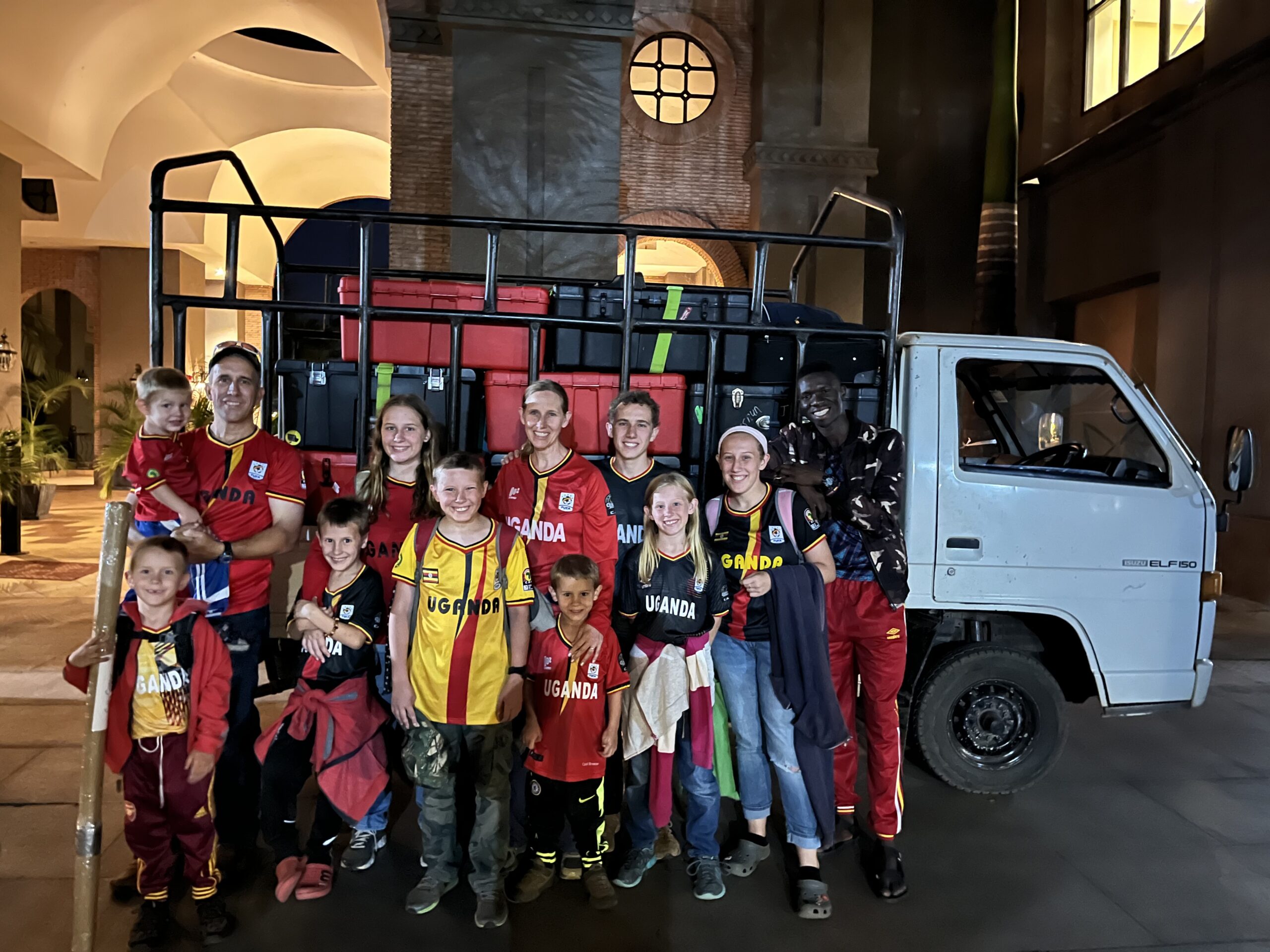
We found my dear friends, the Cessnuns, a missionary family of eleven, packing their entire lives into 33 plastic trunks. After ten years of living, serving, and raising a family here, they were returning to Texas. Most of the kids have never lived anywhere but Uganda and only know America from brief visits. Doing anything with a family of eleven is a chore for which Dr. Colby and his wife, Maryanne, deserve a lot of credit, but packing them up for a move is nothing short of heroic. Their departure is the reason we timed this very brief introductory trip. While I wanted to introduce Cindy to as many of our new friends as I could and the land in which I have learned to feel at home, I really wanted her to meet this precious family, and to learn from their selfless example what a beautiful thing living and serving in Uganda can be.

Cindy did that and more, as she became fast friends with Maryanne and and Colby, and immediately fell in love with their kids as much as one can when we are still trying to master all their names. We busied ourselves packing, cleaning, and encouraging as each of them were interrupted with tearful goodbye after another. “We will see you again in Heaven,” I heard Maryanne say to one woman in her Bible study and prayer group. I was so struck with the earthly permanence of that statement that I joined in their crying. It remained like that for a couple days, while we turned ten years of living into luggage. I had entered into an agreement to buy the Cessnun’s vehicle and a few household items, but as they found other things they could not take along, we kept amending our agreement until I ended up buying everything they left behind after they sold what they could and gave to the mission kids anything they could use.

On Friday the 21st, a bus showed up to take the Cessnun family away for the last time. Caesar, the driver insisted that he could not carry all the cargo and passengers, the very thing he was hired to do. Disappointed but determined, we rode caravan style, with Cindy and me in a van full of and piled high with cargo behind the speed-crazed bus driver. This was only the second time I have ever driven in Uganda, and the first on a paved road. I drove the new-to-me 1995 Toyota all-wheel-drive Hiace Super Custom van, which has an occasional issue with engine overheating. Much to Cindy’s terror I kept up with Caesar, even though he had a bad habit of overtaking while going up hills or around curves. My police pursuit-driving came in handy, as long as I remembered to drive on the left and signal every thought, intention, or observation. It’s a Uganda thing. They use their turn signals, horns, and high-beam lights for all sorts of communication.

We arrived at a hotel with a four-room suite for the eleven Cessnuns plus one, a Ugandan named Innocent, who has been sort of an unofficial part of the Cessnun family for about a year. This tearing apart was especially hard for him, since he was brother and son to this family for so long. We stayed in a smaller room on the other side of the same hotel, the Imperial Mall Residences. It was so grand and luxurious, one could possibly forget they were in Uganda. While Colby negotiated through the disappointing travel arrangements, it was clear we and the van would be required a few more days. We were happy to sacrifice this part of our Uganda stay to serve our friends. They mean so very much to us, and were in real need of help they have been so willing to give others these ten years.

While in Entebbe, I took the opportunity to approach a mobile phone service center and inquire about my phone service, which was still not functional. To reactivate it would require my passport, but when I presented my passport cover filled with all manner of travel paperwork I was horrified to discover one missing content — the passport itself. Surely I had left it in my luggage in Karuma. I would find it when I returned. In the meantime, Cindy bought me a temporary phone line using her passport.

We stayed with the Cessnuns in Entebbe until Saturday the 22nd, when we again rode caravan style, but this time I rode shotgun in an open cargo truck filled with luggage, while Colby drove his family one last time in their family car behind us. Cindy stayed behind at the hotel. We arrived at Entebbe International Airport safely by the grace of God, and began a procession of eleven luggage trolleys up the long ramp to the departure gate. Innocent, a handful of airport staff, and I babysat the luggage as the broken-hearted missionary family proceeded through the Covid checkpoint. Once they were cleared, we all shared hugs and tears one last time, while Innocent and I bid them farewell. My friends and missionary heroes were closing the Uganda chapter of their lives as Cindy and I were only beginning to write ours. 

God has a way of helping us through our pain, and on this day, help came in the form of distraction. When we got to the exit gate at the front of a traffic jam of about fifteen cars, Innocent and I quickly realized that Colby took our parking ticket on the plane with him. Attendants directed me to move the van out of the cue, though I was nestled well into the one-way-only exit chute. I managed to wriggle out of our predicament and proceed up the down traffic lane to return to the parking payment machines. An officer reviewed all the video footage and found our tag number as we entered the facility and gave me the proper payment information. A few thousand shillings later, Innocent and I were on the road again. (One US Dollar equals about 3,500 Uganda shillings.) Just about the time we started to get weepy again, we recognized we had missed our turn for the hotel. We both worked at finding our landmarks until we made it safely back. Troubles like that do not come from God, but I believe He uses them for His purposes. That night we were prevented from obsessing over our grief by the focus on new problems to solve. 

The next morning we left Entebbe for Karuma, this time I was master of the machine, traveling at my own pace and overtaking only when safe to do so. We were just underway, on the new Entebbe-Kampala Expressway, when a sound like a wounded bird flapping in the engine compartment startled me into stopping on the roadside. I remembered just the day prior when I had thought, “I feel sorry for anyone who breaks down on this expressway, since there is nowhere to go for help.” Now I was one. I opened the engine compartment and found a shredded fan belt had wrapped itself so tightly around the pulley system, I could not budge it. I called Colby’s mechanic, who promised he could have someone to us in about an hour. It was a good thing we were so close to Kampala! A few minutes later, the highway officials came and told us it was too unsafe to remain roadside on the expressway. They would tow us for free to the nearest holding area, the parking lot at the far end of the expressway where the opposing toll booth was situated. The timing was perfect, as we arrived in the towing car just as our mechanic, Sam, was pulling up. He got the shredded belt off in no time but said he needed to do about two hours of repairs at the garage. Since the belt was merely the one that runs the air conditioner, he was able to drive us to his shop and, since there was no proper lounge for us, carried us in another car to the nearby Cafe Java. We had brunch there and killed a little time. When we called Sam, he said he was almost finished and would meet us in about fifteen minutes. As promised, Sam showed up with our car and even rode with us a short way to direct us to the main road, just to see us safely away. He would have a partner pick him up just to save us having to drive back through the rough town roads to the Team Blick Racing Garage. We were honored he would provide such self-sacrificing service and personal care, but I have found that to be the way in Uganda. People do whatever they can for one another here, without expecting in return, except that the same is expected of you when roles are reversed. It is like living in the Bible. I should mention the whole encounter only cost us the equivalent of $105 and we were on the road again with minimal delay.

I was stopped for my very first police checkpoint. (They wave most cars through and stop who they want to.) I had prepared myself with a couple cheap bottles of water in the console of the van. Before he had a chance to ask for a bribe, customarily done by saying something like, “I am thirsty and need money for water,” I offered him a bottle of water and greeted him heartily. When I told him we were heading to Karuma, he said he used to work there, so I began speaking to him in Luo, the local language of the Acholi tribe in the north, which hardly anyone speaks in the south. He beamed with excitement and acted as if he had never heard a Caucasian speak Luo. He gratefully accepted the water and sent me on my way, but not until after I spoke a Luo blessing over him. He laughed as he shouted, “amen,” and returned the blessing. Innocent was impressed and, from the back seat called out, “Uncle Todd, you are the best!” He said I drove like a natural Ugandan too. I take my compliments where I can get them.

Back at the mission, the kids began to show up in more complete numbers. Shalom and her brother, Hosman, even made it, so Cindy got to meet and fall in love with my little unofficial family of friends, who made themselves at home in Team House as long as I was there. All of them were disturbed that our visit would be so short, and we, too, felt like our hellos contained a little bit of goodbye. We listened and loved on each one as they were our own, having our hearts broken for what breaks theirs, and praying with them to overcome their obstacles. African worries make American ones seem so pale and trivial.  

Cindy and I tore apart every compartment of every bag, case, clothing pocket, and crevice, but could still find no trace of my passport. I was determined not to worry, though the natural panic rose to the level of one treading water, refusing to let it drown him. I confessed my fear, and asked God to return my passport, acknowledging that He is omniscient and has everything in His hand. I did my best not to worry but began to make connections to the airport security, since the last place I remember using it was the mobile phone service provider in the airport.

Cindy and I spent Sunday evening and most of Monday sorting and cleaning the Cessnun house. We ran into the mission CEO and founder, who welcomed us and checked to see what we were up to. We hired a truck to come Tuesday and move the remaining contents of the house to our apartment in Gulu, about an hour and a half to the north. 

After we loaded the apartment with furniture and supplies, we had so much to do that the day got away from us. Our utilities had apparently been cut off, so it seemed impossible to stay overnight. I can make it without power, but I need water. Besides, I had promised the mission kids we would return. So we drove back in the dark, something I hope to seldom repeat. With cows, goats, and chickens darting into the road, pedestrians crossing at will, motorists refusing to use headlights or dim them on approach, it was impossible to travel at a safe speed. Nighttime travel is an emergency only venture in Uganda!

We got home as promised, but found no visitors the first night back, a fact I made a point of whining about the next day when the kids did finally visit. We ended up making a local record of three visits to Gulu in as many days, but finally got things situated, including water valve repairs, utilities reconnected, and drinking water delivery set up. The second of those three days turned out to be a national holiday, something like President’s Day, when all the offices we needed were closed. We spent the extra time with our friend, fellow missionary, and our own board member, Nancy Cardoza, who lives and serves in Gulu. It was a special treat to see her. Also in Gulu was my friend, Nurse Patrick, who is now enrolled in school to become a Clinical Officer, sort of like a Physician’s Assistant or Nurse Practitioner. He came over to the apartment and helped me set up the beds and kitchen range. He has claimed Cindy and me as parents, and it is our joy, any chance we get, to be with him and his family, which he left behind while he engages in study.

During one lunch meeting, I received a call from the airport VIP concierge, asking details about my missing passport. Just as I was talking to him outside the restaurant, Cindy burst out from the dining room yelling, “They have your passport at the Tick Hotel!” She had used her administrative genius to find their contact and get the answer to our stressful mystery. Thank God for His providence and for Cindy the best support teammate ever. Hallelujah, my passport was found! Apparently it had been left on the copier by the night-shift clerk I had awaken on our first night in Uganda.

Cindy got to experience downtown Gulu and the notorious Gulu Main Market. Imagine the biggest farmer’s market you’ve ever seen, with three more stories of shops of all kinds, with every manner of hand-made clothing, shoes, crafts, and Ugandan necessities all under one roof. It is overwhelming. We also went to the favorite supermarket of expatriates, Cynibel, where American treats can be found and American credit cards are honored. Cindy remembers the smells as the most memorable, between the body odor of a mass of people many of whom have never seen a shower, the open air fish market, and the smoke and dust everywhere. She had a lot to get accustomed to.

I parked our van outside Team House and was informed the brake lights were on. It turned out the solenoid switch that controls the brakes lights and disengages the parking transmission lock had failed. I disconnected the switch to keep from killing the battery and had to reconnect it each time we drove just to shift out of “Park.” It was a hassle and potentially dangerous failure, since the brake lights never went off, so we made another call to our mechanic in Kampala. They would arrange to have it fixed before our departure Saturday. 

We had dinner with Robert and Zam, and Cindy finally got to experience Zam’s Buganda fare and the worship that has become a normal part of our interactions there. Praise, their toddler, and Noah, their new baby, kept us entertained. They are such a precious family! Promise had gone back home, so they have employed a new “follower,” Judith, who helps babysit, cook, and clean. They made us family as they always have made me, but it was special to finally include Cindy.

We met Dr. Corina, another visitor from America, about whom we had heard a lot. She was instrumental in building Team House, the staff housing, and the ceilings on all the medical wards. These were life-changing improvements. She was a real treat, and I was sorry we didn’t get more time with her. She had her own family visiting, and was working in the hospital, which I missed the opportunity to do this trip.

We did attend two morning devotions, one of the general staff and one at the hospital. Cindy was welcomed at each and I was made to feel a fixture as an already existing part of the family. The devotional gathering was really the only hospital experience I got this trip except for a few brief visits, as I breezed through seeking to find friends at work to greet and encourage. 

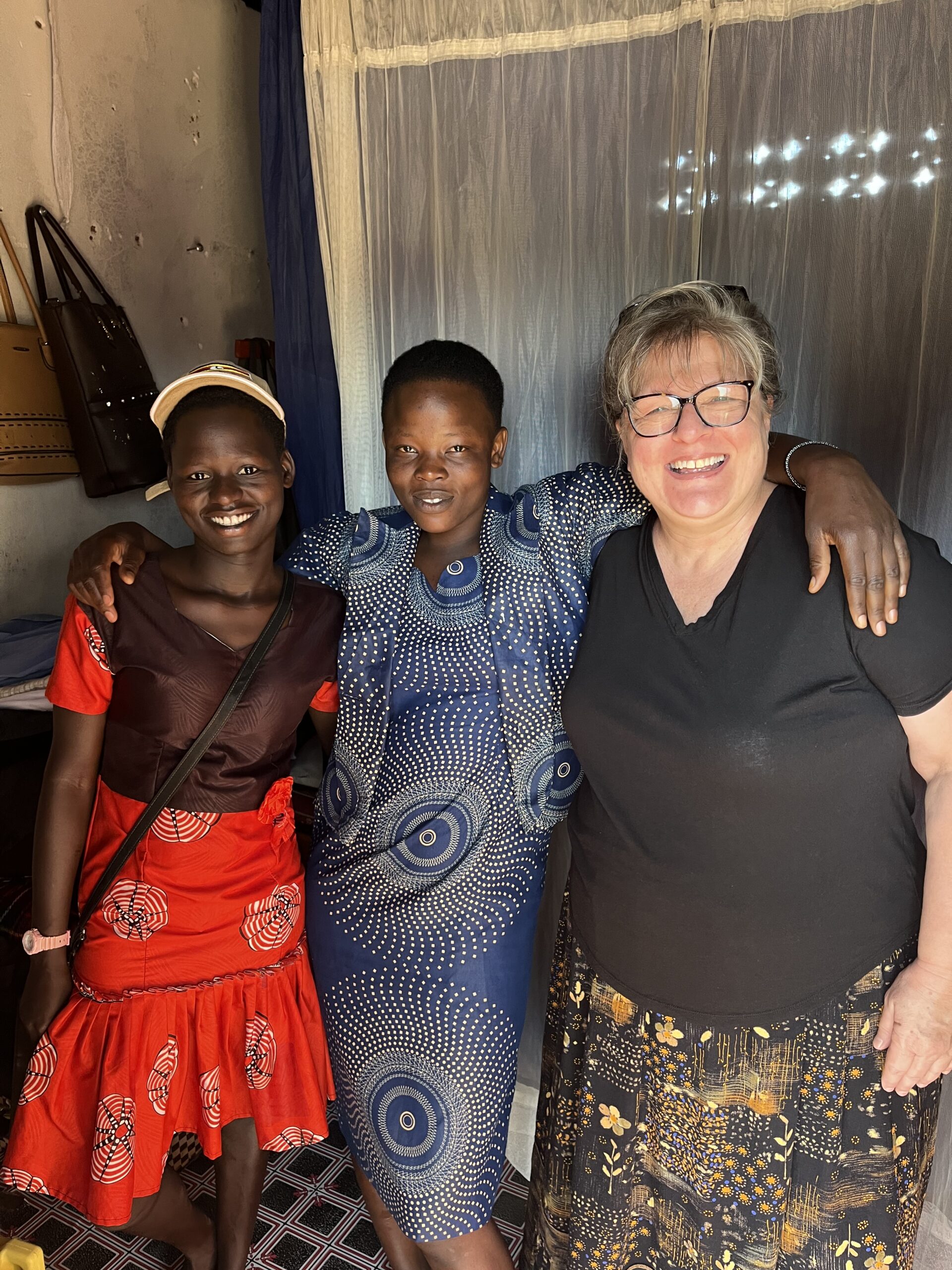
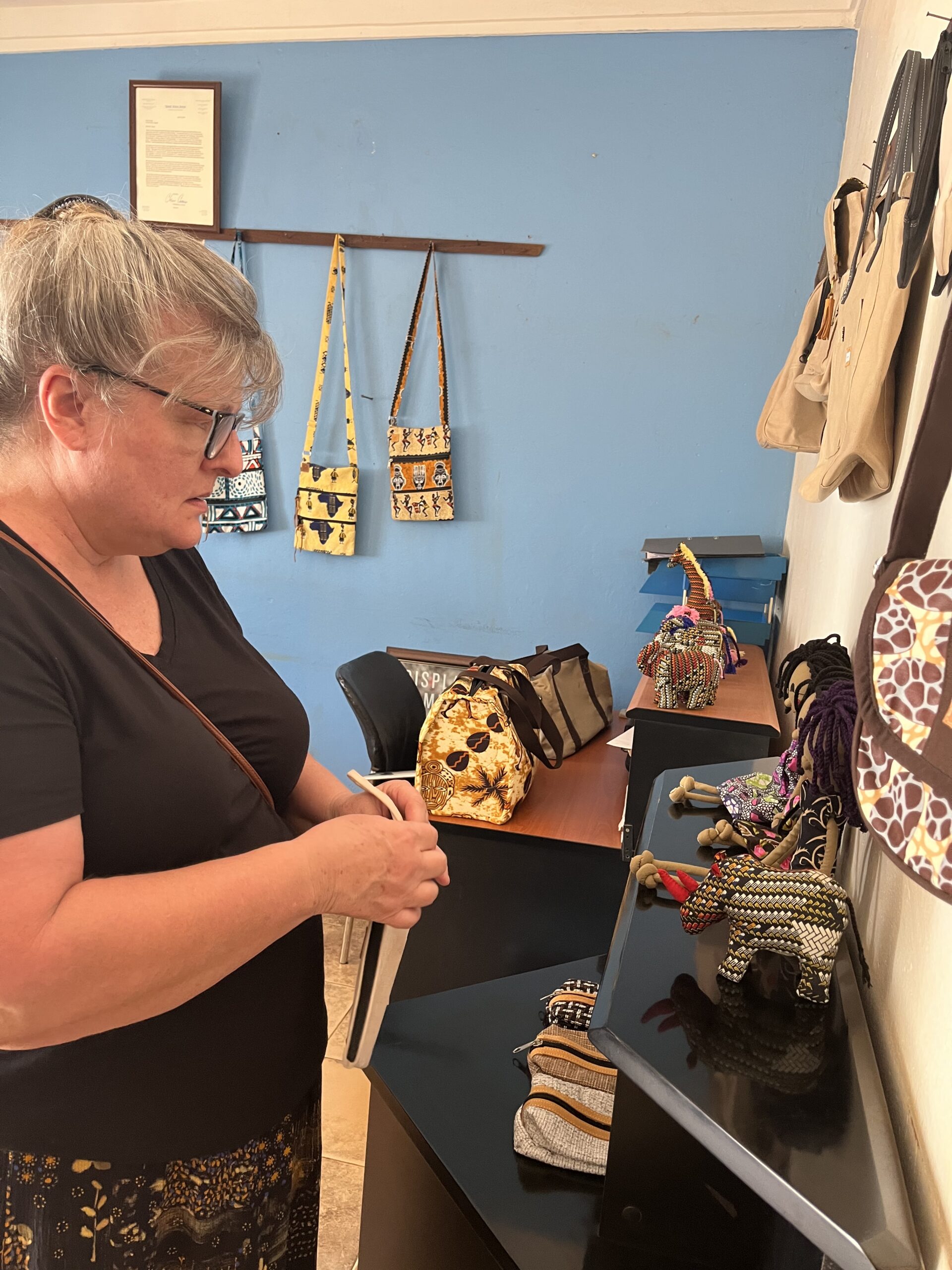
On the second of our three-in-a-row visits to Gulu, we were accompanied by Janet, who helped us negotiate the market. She made me promise to host a pork dinner that night and helped us find all the ingredients without being taken advantage of as visitors. That day, we visited Jolly (pronounced “Joe Lee”) at Wend Africa, a ministry that employs endangered women as seamstresses. Cindy was thrilled to meet the lady who crafted her carry-on bag and to see all the amazing resources of this ministry being brought to bear to bring women out of abuse and into independence. When we got back to Team House, Janet began to cook and, assisted by many of her mission sisters, made us a meal to remember, which we shared with as many as showed up, about fifteen. It was a good night of fun and fellowship.

On the third of our trips to Gulu, Patrick managed a break from school and accompanied us back to the mission compound to surprise his family with a visit. That night there was a football (soccer) match between the hospital staff and the teaching staff, and since Patrick is the hospital’s prized striker, he was more than welcome. We, the hospital staff, won three goals to two. 

Our last day at the mission was stressful with a lot of goodbyes and a visit from the mechanic from Kampala, but we managed a tour with the Agricultural Overseer, Emma. He demonstrated the maize (corn) miller, the chicken house, the pig pen, the new pole barn, and then the goat house. Cindy, who has some background in agriculture as it occurs in America, was less familiar with goats. So when she asked about the two kinds of goats in the herd, Emma and I were confused. She went on to explain that there were some normal looking goats and some fuzzier ones. Emma and I both broke out laughing as we explained the fuzzy goats were sheep! 

We met with the CEO and his wife at their home. Cindy was pleased to hear, firsthand, the story of how they carved this mission compound out of the wilderness. It was inspiring and friendly, even as they recognized we were planning something different up north. We got some valuable advice and encouragement, as well as a welcome to return to whenever possible, within the parameters of the their mission vision.

While this was a brief trip, and some might misunderstand its relative lack of missional purpose, we were repeatedly told by missionaries in the know to take things slow in the beginning, develop and maintain relationships, and try to learn the language. We prioritized these things on this trip, emphasizing the development and maintenance of relationships. 

Cindy’s take-away was that she fell in love with the place just as I have, she loves our new Uganda home, and seemed as broken-hearted as I was to leave it all behind and fly, not home, but to America.